
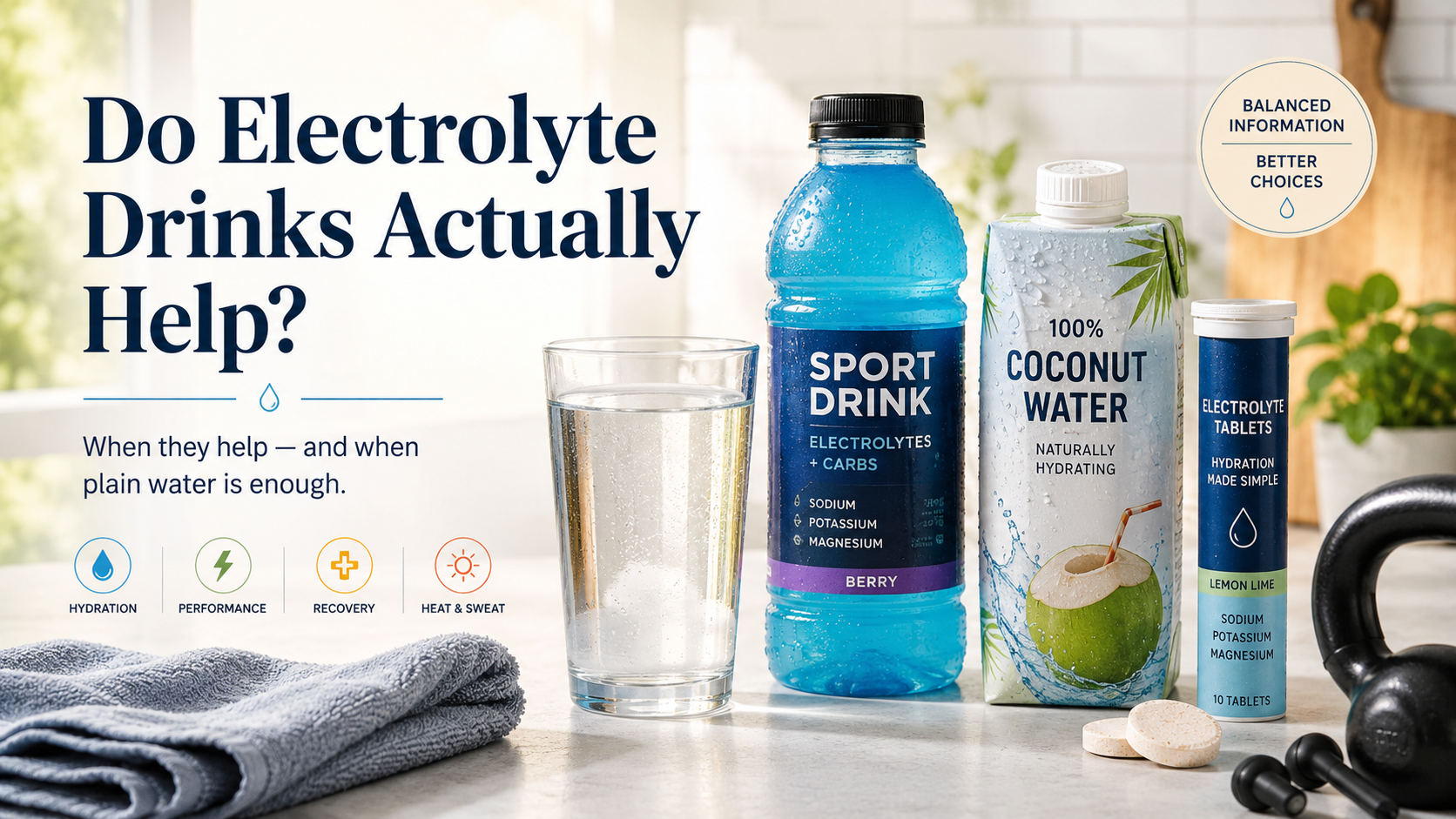
Electrolytes have become beverage royalty.
They are now added to bottled water, powders, tablets, gels, chews, and drinks in enough flavors to stock a small candy store. The marketing sometimes makes it seem as though drinking plain water is a reckless act performed only by people who have given up on wellness.
So, do electrolyte drinks actually help?
Yes—when you have lost enough electrolytes to need replacing.
That last part matters.
What Electrolytes Do
Electrolytes are minerals that carry an electrical charge when dissolved in body fluids. They include sodium, potassium, chloride, calcium, and magnesium.
Your body uses them for important jobs, including:
- Maintaining fluid balance
- Supporting normal muscle contraction
- Helping nerves send signals
- Supporting normal heart function
- Helping cells function properly
You lose electrolytes through sweat and through fluid losses caused by vomiting or diarrhea.
Fortunately, you also replace them all the time through ordinary foods and beverages.
That means an electrolyte drink can be useful, but it is not something everyone needs simply because the bottle looks athletic.
When an Electrolyte Drink May Be Useful
Electrolyte drinks can be especially helpful when fluid and mineral losses are significant.
That may include:
- Prolonged or intense exercise
- Extended periods of heavy sweating
- Physical work in hot or humid weather
- Long endurance activities
- Significant fluid loss from vomiting or diarrhea
- Situations in which a healthcare professional recommends additional electrolyte replacement
According to the American College of Sports Medicine (ACSM), most people exercising for less than about 60 to 90 minutes a day in normal weather are unlikely to become significantly dehydrated or depleted of electrolytes.
Conditions matter, however.
Someone exercising for an hour in an air-conditioned gym is having a very different experience from someone doing yard work for several hours in August heat.

How much you sweat matters, too. Some people naturally lose more fluid and sodium in sweat than others. ACSM notes that sweat rates can vary widely, which is one reason hydration needs are not identical from person to person.
For an ordinary day, a short workout, or a leisurely stroll to the mailbox, plain water and regular meals are usually enough.
No neon beverage required.
Electrolyte Drinks and Illness
Vomiting and diarrhea are different from ordinary thirst because they can cause substantial losses of both fluid and electrolytes.
The National Institute of Diabetes and Digestive and Kidney Diseases (NIDDK) recommends replacing both fluids and electrolytes during diarrhea. For many adults with a mild, short-lived illness, water and other fluids may be enough to stay hydrated.
But when diarrhea is severe, fluid loss is significant, or dehydration begins to develop, an oral rehydration solution (ORS) may be more appropriate than a standard sports drink.
An ORS is specifically formulated with water, glucose, and electrolytes in proportions designed to support rehydration. NIDDK particularly recommends oral rehydration solutions for older adults, people with certain health conditions, and those experiencing severe diarrhea or signs of dehydration.
And here is an important detail for anyone who automatically raises an eyebrow when she sees sugar on a label:
The glucose in an oral rehydration solution has a job.
The World Health Organization (WHO) explains that oral rehydration solutions combine glucose and electrolytes to effectively replace fluids lost during diarrhea. Glucose helps the small intestine absorb sodium, which in turn helps the body absorb water.
In that setting, sugar is not simply there to make the drink taste better.
Context matters.
This is also why a standard sports drink and a true ORS are not necessarily interchangeable. Sports drinks are designed primarily around exercise and palatability, while oral rehydration solutions are formulated specifically to replace fluid and electrolyte losses associated with dehydration.
Very sugary beverages can also be a poor choice when diarrhea is significant. Rather than improvising with soda or whatever happens to be in the refrigerator, a properly formulated oral rehydration product may be the better option when substantial rehydration is needed.
If vomiting or diarrhea is severe, you cannot keep fluids down, or you develop signs of dehydration such as dizziness, very dark urine, or urinating much less than usual, contact a healthcare professional.
How to Choose an Electrolyte Drink
If you actually need an electrolyte product, the next question is obvious:
Okay, what am I looking for?
Start with the reason you are drinking it.
An electrolyte drink for a long, sweaty workout is serving a different purpose from an oral rehydration solution used during an illness.
Turn the bottle or package around and look at the Nutrition Facts or Supplement Facts label and the ingredient list.
The U.S. Food and Drug Administration (FDA) recommends using the Nutrition Facts label to evaluate serving size and nutrients such as sodium and added sugars rather than judging a product by the claims on the front of the package.
Check the Sodium
Sodium is one of the major electrolytes lost through sweat.
If you are choosing a drink specifically to replace what you lost during prolonged or heavy sweating, the sodium content matters.
At the same time, more sodium does not automatically make a product better. Compare the amount with why you are drinking it and consider the rest of your diet.
Look at Added Sugar
Added sugar deserves context rather than an automatic thumbs-down.
During prolonged exercise, carbohydrate can provide energy as well as make a drink easier to consume.
And as we just discussed, glucose plays an important role in oral rehydration solutions.
But if you are sitting at your desk sipping an electrolyte beverage simply because water seems boring, a high-sugar drink may be providing something you do not particularly need.
The question is not simply:
“Does this have sugar?”
A better question is:
“Why is the sugar here, and does that purpose fit what I need?”
That is a much more useful way to read a label.
Check the Serving Size
A bottle may contain more than one serving.
If you drink the entire container—and most of us do not lovingly measure half a sports drink and save the rest for Thursday—look at how the nutrition information changes based on what you actually consume.
The FDA recommends checking the serving size first because all of the calorie and nutrient amounts on the label are based on that amount.
Read the Ingredient List
Beyond electrolytes and carbohydrates, some products contain:
- Artificial colors
- Artificial or natural flavors
- Sugar alcohols
- Non-nutritive sweeteners
- Caffeine
- Vitamins
- Herbal ingredients
- Other performance or wellness ingredients
Those extras may or may not matter to you.
If you prefer simpler products, compare ingredient lists and choose one that provides what you need without a collection of extras you were not shopping for in the first place.
You do not need to fear an ingredient list.
You simply need to understand what you are buying.
A Real-World Example: Thorne Daily Electrolytes
Here is one way to put those label-reading skills to work.
Thorne Daily Electrolytes – Watermelon is a powdered electrolyte mix sold in individual stick packs. According to the current product label, one serving provides 480 mg of sodium, 99 mg of potassium, 40 mg of magnesium, 70 mg of calcium, and 750 mg of chloride.
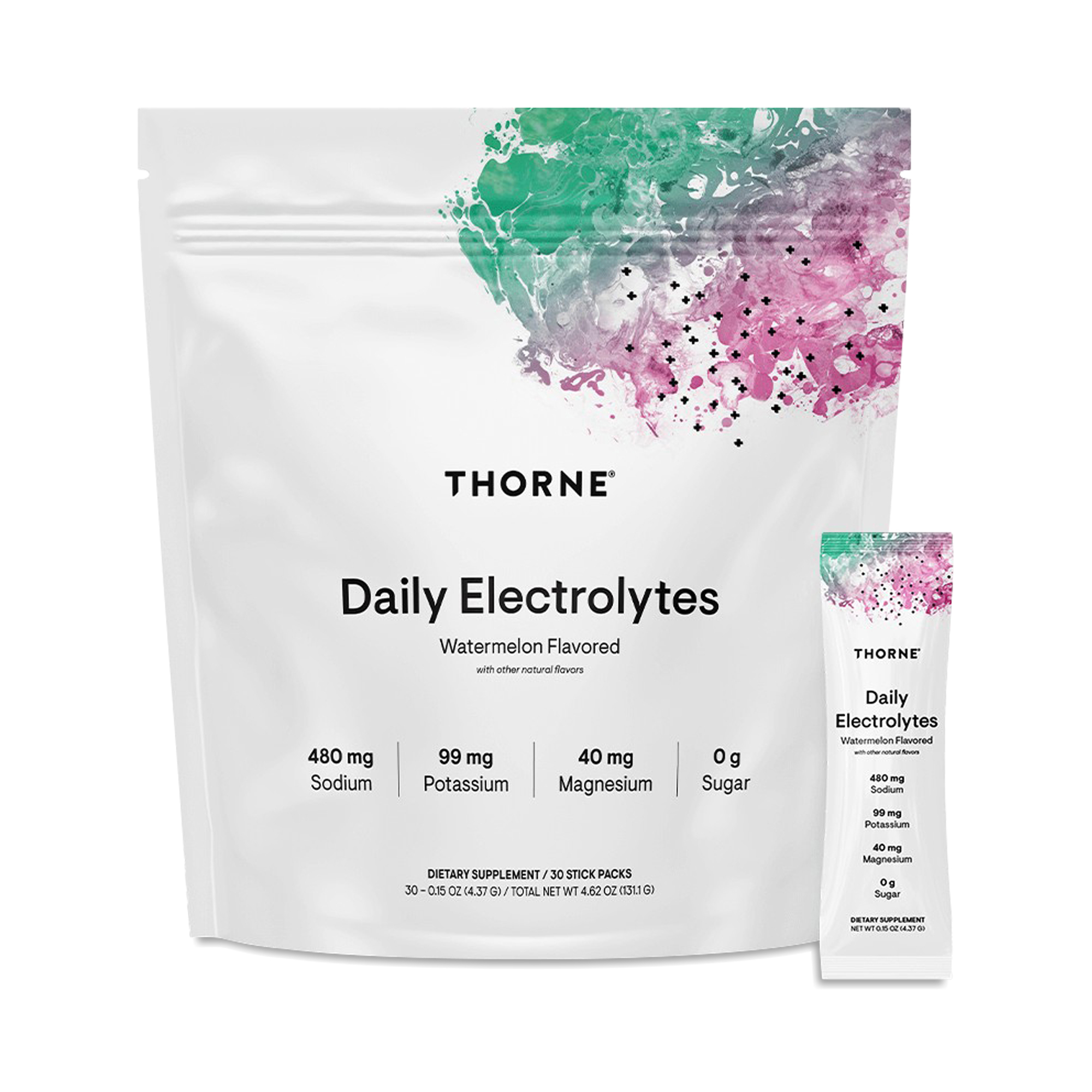
Thorne Daily Electrolytes
It contains 0 grams of added sugar and is sweetened with stevia. It is also NSF Certified for Sport, which means the product is tested to verify label claims and screen for substances prohibited by major athletic organizations.
Does that mean everyone needs it?
Nope. We have spent an entire article establishing otherwise. 😄
But if you are sweating heavily for an extended period, exercising in hot or humid conditions, or otherwise have a reason to replace electrolytes, this is the kind of product you can evaluate using the same questions we just discussed:
- How much sodium does it provide?
- Which other electrolytes are included?
- Does it contain added sugar?
- What sweetener does it use?
- Does the formula fit the reason I am drinking it?
In this case, the relatively higher sodium content makes more sense as a sweat-replacement product than as something to sip automatically while sitting at your desk.
And remember what we discussed earlier about sugar: zero added sugar is not automatically better in every hydration situation.
This product is designed for electrolyte replacement without additional carbohydrate. It is not the same thing as a glucose-containing oral rehydration solution used during significant illness-related dehydration.
Affiliate note: I have not personally tried Thorne Daily Electrolytes, so I am not presenting it as a personal review or recommendation. I am including it as an example of a product you can evaluate using the principles in this article. If you purchase through my affiliate link, I may earn a commission at no additional cost to you.
View Thorne Daily Electrolytes at Thrive Market →
The word hydration on the package does not get the final vote.
You do.
You Can Get Electrolytes From Food, Too
Electrolytes did not originate in plastic bottles.
Whole foods provide many of the same minerals your body needs every day.
For example:
Potassium is found in foods such as potatoes, beans, lentils, leafy greens, tomatoes, bananas, avocados, dairy foods, nuts, fish, and poultry.
Magnesium is found in nuts, seeds, beans, whole grains, and leafy green vegetables.
Calcium is available from dairy foods, fortified foods, certain leafy greens, and some fish.
Sodium and chloride are commonly supplied through salt and the foods we eat.
The National Institutes of Health (NIH) Office of Dietary Supplements notes that people should get most nutrients from food when possible and identifies a wide variety of foods as sources of potassium.
A varied diet built around whole and minimally processed foods can provide substantial amounts of these minerals without requiring a specialty beverage.
Sometimes the most exciting electrolyte delivery system is lunch.
And that is worth remembering in a wellness culture that is remarkably talented at putting ordinary nutrients into expensive little packets.
More Is Not Always Better
Electrolytes are necessary.
That does not mean unlimited electrolytes are better.
Depending on the product—and why you are drinking it—you may be getting more sodium, added sugar, sweeteners, or other ingredients than you actually need.
Certain health conditions and medications can also affect the way your body handles minerals.
Potassium is one example. The NIH Office of Dietary Supplements notes that people with kidney problems and those taking certain medications may be at greater risk of developing potassium levels that are too high.
That does not make potassium dangerous. Your body needs it.
It simply means that physiologically active minerals deserve a little more respect than “well, it says hydration on the package.”
If you have kidney disease, heart disease, diabetes, take medications that affect fluid or potassium levels, or have been told to limit sodium, potassium, or fluids, talk with a healthcare professional about which electrolyte products—and how much—are appropriate for you.
So, Do You Need an Electrolyte Drink?
Maybe.
And that may be the least exciting answer in the wellness industry.
If you have been sweating heavily for an extended period, participating in prolonged exercise, working in the heat, or replacing significant fluid losses from illness, the right electrolyte product can be genuinely useful.
If you spent the afternoon answering emails and walking to the mailbox, you probably do not need a powdered hydration strategy.
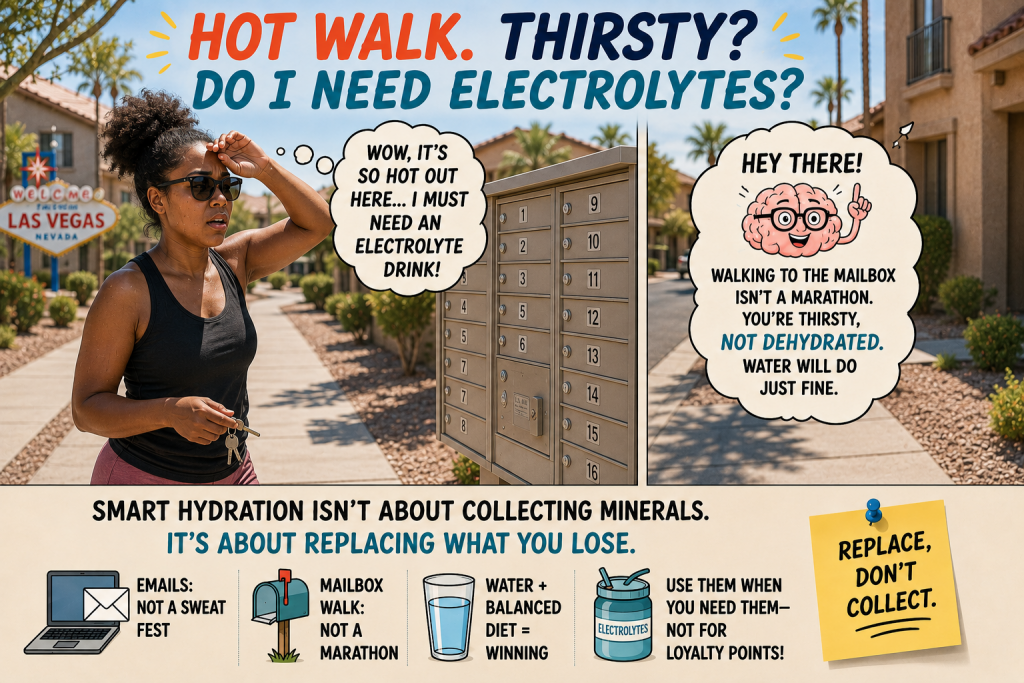
Water and a balanced diet remain very effective.
Electrolyte drinks work best when they solve an actual problem: meaningful fluid and mineral loss.
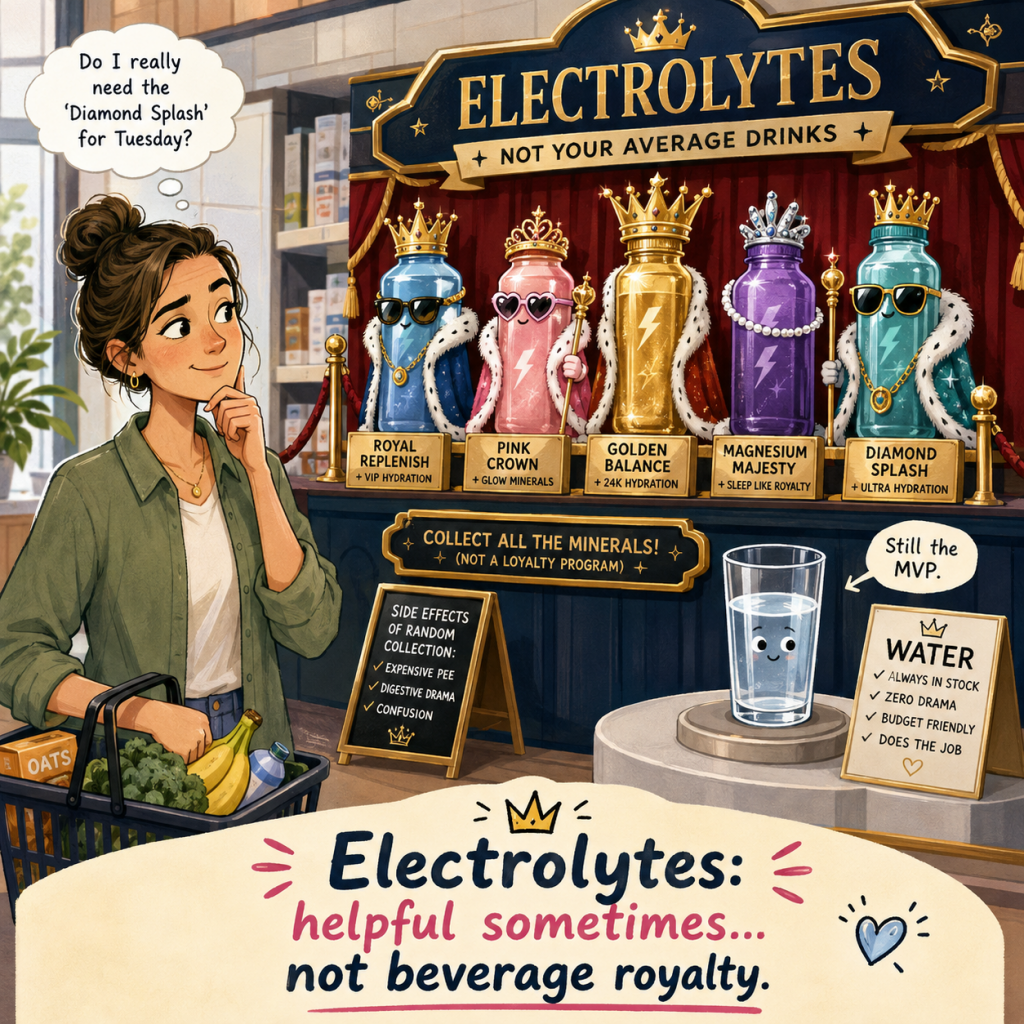
The key is replacement—not randomly collecting minerals as though they are loyalty points.
Want to Build Healthier Habits Without Overhauling Your Life?
Hydration is important, but it is only one piece of everyday wellness.
If you are trying to make healthier choices and keep finding yourself surrounded by complicated rules, expensive products, and advice that makes you wonder whether healthy living has become a second full-time job, I created something for you.
My free guide, 7 Everyday Habits That Support a Healthy Inflammatory Response, walks you through simple, practical habits involving real food, hydration, movement, healthy fats, restful sleep, stress management, and more.
You do not have to change everything at once.
You just need a realistic place to begin.
Get your free copy of 7 Everyday Habits That Support a Healthy Inflammatory Response and choose one simple habit you can start today.
Get Your Free Wellness Guide →
Small changes can lead to lasting wellness.
One thoughtful choice at a time.