
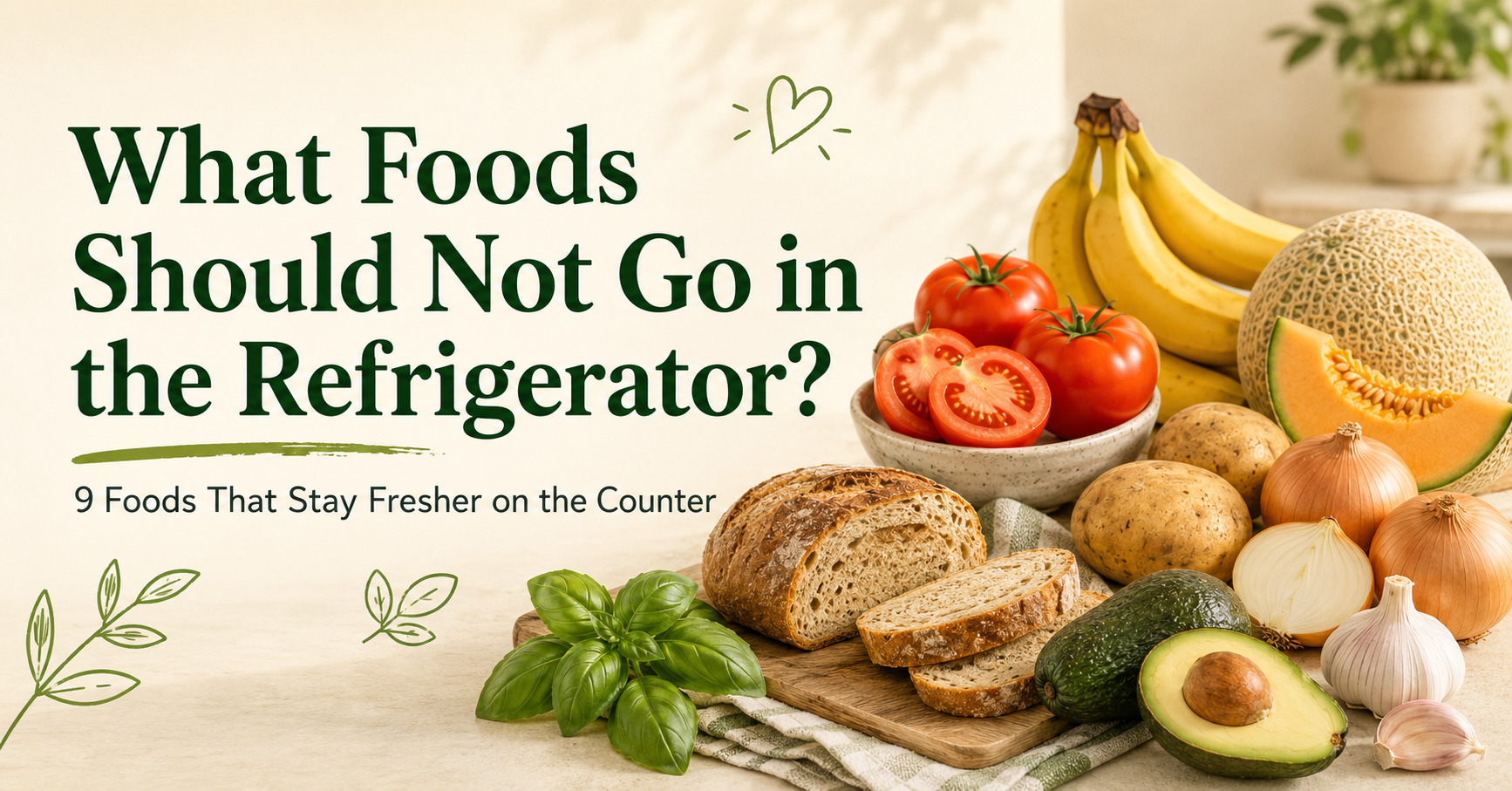
Most of us have been taught that the refrigerator is the best place to keep food fresh. After all, colder temperatures help slow bacterial growth and can extend the shelf life of many foods. However, not everything belongs in the fridge.
In fact, some foods actually lose flavor, develop unpleasant textures, or spoil faster when refrigerated. Knowing which foods are better left at room temperature can help you enjoy fresher ingredients, reduce food waste, and get more value from your grocery budget.
Here are nine common foods that are usually better off staying out of the refrigerator.
1. Tomatoes
Tomatoes are one of the most commonly refrigerated foods, but they often taste better when stored on the counter.
Cold temperatures can interfere with the ripening process and alter the texture of the fruit, causing tomatoes to become mealy instead of juicy. Refrigeration can also dull their flavor, making them less sweet and less vibrant.
I learned this lesson the hard way. For years, I automatically put tomatoes in the refrigerator because I assumed it would keep them fresh longer. Instead, they lost some of their sweetness and never seemed to taste quite right. Once I started leaving them on the counter, the difference was noticeable. Whether it’s cherry tomatoes or larger slicing tomatoes, they seem to develop better flavor and a much more enjoyable texture at room temperature.
Best storage tip: Keep tomatoes on the counter away from direct sunlight and use them when fully ripe.
2. Bananas
Bananas thrive at room temperature. Refrigerating them too soon can slow the ripening process and cause the peel to darken.
While the fruit inside may still be perfectly edible, the appearance often makes people think the bananas have gone bad when they haven’t.
Best storage tip: Leave bananas on the counter and separate them from other fruits if you want to slow ripening.
3. Potatoes
Potatoes should be stored in a cool, dark place rather than the refrigerator.
When potatoes are exposed to cold temperatures, their starches begin converting into sugars, which can affect both flavor and texture.
I also learned another storage lesson the hard way. For a long time, I kept my potatoes and onions together because it seemed convenient. After a while, I noticed my potatoes were sprouting much faster than they should. That’s when I discovered that onions release gases that can encourage potatoes to sprout more quickly. Since storing them separately, my potatoes have lasted much longer.
Best storage tip: Keep potatoes in a cool, dark location and store them away from onions whenever possible.
4. Onions
Onions need a dry environment and plenty of ventilation.
The moisture inside a refrigerator can cause onions to soften, become moldy, or spoil more quickly. Whole onions generally last much longer when stored properly at room temperature.
Best storage tip: Keep onions in a mesh bag, basket, or other well-ventilated container in a cool, dry location.
5. Garlic
Garlic is another pantry staple that doesn’t appreciate refrigerator storage.
Cold temperatures can encourage sprouting and create a rubbery texture that makes garlic less appealing to cook with.
Best storage tip: Store garlic bulbs in a dry area with good airflow.
6. Bread
Many people refrigerate bread to prevent mold, and I was one of them.
For years, I stored my bread in the refrigerator because it seemed like the logical thing to do. It did help keep mold away for a while, but I quickly noticed that the bread became stale much faster. The texture just wasn’t the same, especially for sandwiches and toast.
These days, I freeze my bread instead. When I need a few slices, I simply pull them out of the freezer and put the rest back. It’s a simple habit that keeps the bread fresh much longer without sacrificing taste or texture.
I do make one exception when it comes to bread, and that’s Ezekiel bread. Since it’s sold frozen, I usually keep it that way. I’ve noticed that once it’s thawed and placed in the refrigerator, I don’t have a lot of time to use it up.
What works best for me is taking out only the slices I need for the day and putting the rest right back into the freezer. It’s a simple habit, but it helps keep the bread fresh and prevents me from wasting any.
Best storage tip: Keep bread at room temperature if you’ll use it within a few days. For longer storage, freeze it and remove slices as needed.
8. Whole Melons
Whole melons generally retain their flavor better at room temperature.
Once cut, they should be refrigerated, but storing an uncut melon on the counter can help preserve its taste and texture.
Best storage tip: Refrigerate only after slicing.
9. Avocados
If you’ve ever purchased a rock-hard avocado, the refrigerator won’t help it ripen.
Avocados need room-temperature conditions to soften properly. Once ripe, refrigeration can help slow further ripening and give you a little extra time before they become overripe.
Best storage tip: Leave avocados on the counter until ripe, then refrigerate if necessary.
Why Refrigeration Isn’t Always Better
It’s easy to assume that colder is always better when it comes to food storage. However, many fruits and vegetables continue to ripen after harvest. Refrigeration can interrupt this natural process and affect flavor, texture, and overall quality.
Some foods are also sensitive to moisture. Refrigerators create an environment that can encourage softening, sprouting, or other unwanted changes. Understanding how different foods respond to temperature can help you make smarter storage decisions and enjoy fresher ingredients.
The goal isn’t to avoid using your refrigerator. It’s simply knowing when refrigeration helps and when it actually works against you.
Quick Food Storage Tips
To keep your produce at its best:
Store foods away from direct sunlight.
Use cool, dry, well-ventilated spaces whenever possible.
Avoid storing onions and potatoes together.
Refrigerate produce only when it reaches peak ripeness if recommended.
Check fruits and vegetables regularly for signs of spoilage.
Freeze bread if you won’t use it within a few days.
Keep herbs like basil on the counter rather than in the refrigerator.
Proper food storage is just one piece of creating a healthier home. If you’re interested in other simple wellness practices, be sure to read my article, “Supporting Your Body’s Natural Healing Potential: Simple Wellness Habits That Help You Feel Your Best.” And because a healthy kitchen starts with more than food, you may also find my article, “5 Things to Know Before Buying a Countertop Water Filter,” helpful.
Storing food properly is a simple way to reduce waste and enjoy fresher ingredients, but it’s only one part of creating healthier habits in the kitchen. If you’re interested in making more mindful food choices, you might enjoy my guide, “5 Simple Steps to Clean Eating,” which shares practical tips for building a healthier approach to everyday meals.
Final Thoughts
The refrigerator is an essential kitchen appliance, but it isn’t the best storage solution for every food item. Tomatoes, bananas, potatoes, onions, garlic, bread, basil, whole melons, and avocados all tend to perform better when stored properly outside the fridge.
Over the years, I’ve made some of these storage mistakes myself. I’ve refrigerated tomatoes, stored onions and potatoes together, and kept bread in the refrigerator thinking I was extending its life. While those choices seemed logical at the time, I eventually discovered there were better ways to keep these foods fresh and flavorful.
Making a few simple changes to the way you store food can improve flavor, reduce waste, and help your groceries last longer. Sometimes the best place for fresh produce isn’t the refrigerator at all—it’s right on your kitchen counter or tucked away in a cool pantry.