Most of us turn on the faucet without thinking twice. We fill a glass, make coffee, rinse fruit, cook pasta, and move on with life.
But every now and then, you may wonder:
What’s actually in my tap water? Understanding tap water quality.
That question does not mean you need to start side-eyeing your kitchen sink like it has betrayed you. Tap water in the United States is regulated, and public water systems are required to follow safety standards set by the Environmental Protection Agency.
Ensuring the best tap water quality is essential for health and safety.
The CDC notes that EPA sets tap water limits for more than 90 germs and chemicals, including things like E. coli and lead.
Still, “regulated” does not always mean “perfect for every home, every person, or every preference.” Your water can be affected by your local source, treatment process, pipes, plumbing, and even whether you use city water or a private well.
So let’s break it down in a simple, non-panic-button kind of way.
Your Tap Water Starts Somewhere
Before water reaches your glass, it usually comes from a local source such as a river, lake, reservoir, or groundwater supply. From there, public water systems treat and test the water before sending it through pipes to homes and businesses.
That treatment process may include steps to remove germs, reduce certain contaminants, and disinfect the water so it is safer to drink.
This is a good thing. Nobody wants mystery microbes turning their water bottle into a science project.
But because water travels through the environment and through infrastructure before reaching your faucet, it may still contain small amounts of minerals, treatment byproducts, or contaminants that vary by location.
Common Things That May Be Found in Tap Water
Depending on where you live, tap water may contain naturally occurring minerals, disinfectants used during treatment, or substances picked up along the way.
Here are some common water-quality concerns people often look into:
Chlorine or Chloramine
Chlorine and chloramine are commonly used to disinfect public drinking water. They help control germs, but some people dislike the taste or smell.
If your water has a “pool-ish” smell, chlorine may be the reason. Not exactly spa water, but also not automatically a crisis.
Lead or Copper
Lead and copper usually do not come from the water source itself. They can enter water through older plumbing, pipes, fixtures, or service lines.
EPA’s Lead and Copper Rule addresses lead and copper exposure in drinking water. EPA’s 2024 Lead and Copper Rule Improvements were designed to better protect communities from lead in drinking water.
Lead is one of those contaminants worth taking seriously, especially in older homes or neighborhoods with aging infrastructure.
Nitrates
Nitrates can come from fertilizers, septic systems, runoff, or natural deposits. They are especially important to watch in certain agricultural areas.
This is also one reason private well testing matters, especially if you live near farmland or use a septic system.
Arsenic
Arsenic can occur naturally in some groundwater sources and may also come from industrial or agricultural sources.
It sounds dramatic because, well, it is arsenic. But the important thing to know is that testing can help you understand whether it is a concern in your area.
PFAS
PFAS are a group of long-lasting chemicals that have become a growing water-quality concern. EPA has established legally enforceable drinking water limits for several PFAS, including PFOA and PFOS.
PFAS can feel like one of those “great, another thing to worry about” topics, but this is exactly why water reports and properly certified filters matter. You do not need to panic. You need information.
Microbes
Public water treatment is designed to reduce harmful germs, but contamination can still happen in certain situations, especially during water main breaks, flooding, treatment issues, or problems with plumbing.
The CDC notes that tap water can become contaminated by germs, chemicals, or other sources.
Again, this does not mean all of these are floating around in your water right now. It simply means these are some of the things people commonly look for when they start paying closer attention to water quality.
How to Check Your Tap Water Quality Report
Before buying anything, start with information.
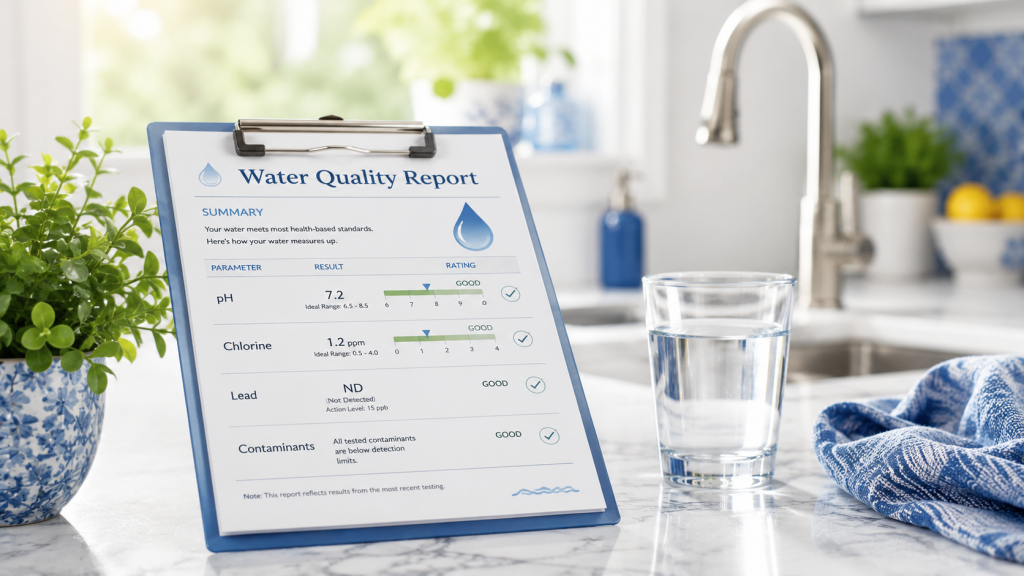
If you are on a public water system, look for your Consumer Confidence Report, also called an annual drinking water quality report. EPA requires community water systems to provide this report each year, and reports must be sent by July 1.
This report can tell you:
- Where your water comes from
- What was detected
- How those levels compare to legal limits
- Whether there were any violations
- What your local water system is doing to treat the water
Basically, it is your local water’s report card.
And yes, it is more useful than that one report card from middle school where the teacher wrote “talks too much.” We’ve all evolved.
What If You Have a Private Well?
Private well water is a different story.
If your home uses a private well, the federal government generally does not regulate the quality and safety of that water under the Safe Drinking Water Act. EPA says private well owners are responsible for making sure their household drinking water is safe.
That means testing becomes especially important.
Well water may be affected by nearby land use, flooding, septic systems, agriculture, natural minerals, or local geology. EPA recommends testing private wells annually for total coliform bacteria, nitrates, total dissolved solids, and pH levels. You may also need additional testing depending on what is common in your area.
A good starting point is to check with your local health department or state environmental agency to see what they recommend.
Do You Need a Water Filter?
Thinking about getting a filter? You may also like: 5 Things to Know Before Buying a Countertop Water Filter
Maybe. Maybe not.
A water filter should match the problem you are trying to solve.
Some filters are designed mostly to improve taste and odor. Others are certified to reduce specific contaminants, such as lead, certain PFAS, or other substances.
This is where labels matter.
NSF explains that different water filter standards cover different claims. For example, NSF/ANSI 42 relates to aesthetic concerns like chlorine taste and odor, while NSF/ANSI 53 relates to certain health-related contaminant reduction claims.
In plain English:
Don’t just buy the prettiest pitcher and hope for the best.
Look for what the filter is actually certified to reduce.
Simple Questions to Ask Before Choosing a Filter
Before buying a water filter, ask:
- What does my local water report show?
- Am I trying to improve taste, reduce specific contaminants, or both?
- Is my home on city water or a private well?
- Does my plumbing include older pipes or fixtures?
- Is the filter certified for the contaminants I care about?
- How often does the filter need to be replaced?
- What will replacement filters cost over time?
That last one matters because the filter itself is only part of the commitment.
A filter that sits unchanged for way too long is not exactly doing its best work. Kind of like a gym membership you forgot you had.
Simple Steps Toward Better Water Awareness
Water quality can feel overwhelming at first, but you do not need to turn into a full-time water detective with a magnifying glass and dramatic theme music.
Start here:
1. Find Your Local Water Quality Report
If you use a public water system, look for your Consumer Confidence Report. This gives you a helpful overview of your local drinking water quality.
You can usually find it on your water supplier’s website, through your city or county website, or by contacting your water utility directly.
2. Notice Changes at Home
Pay attention to sudden changes in taste, smell, color, staining, or water pressure.
This is especially important after storms, flooding, construction, nearby repairs, or water main breaks.
Not every change means something dangerous is happening, but changes are worth noticing.
3. Test Your Water If You Have a Private Well
If you have a private well, regular testing is one of the smartest things you can do.
At minimum, check what your local health department recommends. Your area may have specific concerns based on local geology, agriculture, industry, or flooding risk.
4. Match Your Filter to Your Actual Concern
Do not assume every filter handles every contaminant.
Some are great for taste. Some reduce lead. Some are certified for certain PFAS. Some are reverse osmosis systems. Some are whole-house systems. Some are basically just sitting there looking useful.
Check the certification and contaminant reduction claims before you buy.
5. Replace Filters on Schedule
Filters need maintenance.
A neglected filter is not a magical forever sponge. Follow the replacement schedule from the manufacturer, and set a reminder if needed.
Because let’s be honest, most of us are not naturally waking up thinking, “Ah yes, today feels like a filter replacement day.”
The Goal Is Awareness, Not Panic
The goal here is not to panic.
The goal is to know enough to make smarter choices.
Clean living is not about doing everything perfectly. It is about taking one reasonable step at a time. And sometimes that step starts with the water in your glass.
Whether you are checking your local water report, testing your well, replacing an old filter, or simply learning what those water-quality terms actually mean, every bit of awareness helps.
Your water does not have to be a mystery.
And your kitchen sink can go back to being just a kitchen sink.
Soft CTA
Want more simple clean-living tips? Explore more healthy home, clean eating, and wellness resources throughout the website to help you make healthier choices without overcomplicating your life.
FAQ: What’s in Your Tap Water?
Is tap water safe to drink?
In the United States, public tap water is regulated, and water utilities must follow EPA drinking water rules. The CDC says EPA sets limits for more than 90 germs and chemicals in tap water, including E. coli and lead.
However, water quality can vary by location, plumbing, and water source.
How do I find out what is in my local tap water?
Look for your Consumer Confidence Report, also called an annual drinking water quality report. If you use a community water system, your water supplier is required to provide this report each year.
It can show where your water comes from, what was detected, and whether your water system had any violations.
Do water filters remove everything?
No. Different filters are designed for different purposes.
Some filters improve taste and odor. Others are certified to reduce specific contaminants, such as lead, certain PFAS, or other substances. Always check the certification and reduction claims before buying.
Should I test my water if I have a private well?
Yes. Private well owners are responsible for testing and maintaining their own drinking water.
EPA recommends testing private wells annually for total coliform bacteria, nitrates, total dissolved solids, and pH levels. Your local health department may recommend additional testing based on local conditions.
What is the best water filter?
The best water filter depends on what you want to reduce.
Start by checking your water quality report or testing your water. Then choose a filter certified for the specific issue you want to address, whether that is taste, odor, lead, PFAS, or another concern.